

December 1st marks both World AIDS Day (WAD) and the start of Indigenous AIDS Awareness Week, offering an important moment to reflect on progress, renew commitments, and honour the communities and leaders who continue driving BC’s HIV response forward.
World AIDS Day and Indigenous AIDS Awareness Week is a time to:
- Raise awareness about HIV prevention, testing, treatment, and support.
- Establish and Encourage GIPA/MEPA principles.
- Address stigma, discrimination, and misinformation.
- Promote harm reduction.
- Honour those we’ve lost and support those living with HIV.
- Honour and empower communities to take action.
As we mark World AIDS Day and Indigenous AIDS Awareness Week, we recognize and honour the people and organizations whose commitments drive this work every day: peer leaders, Elders, frontline workers, researchers, community-based organizations, and partners working across BC. Moving forward means strengthening—not weakening—the community-based systems that connect people to prevention, testing, treatment, harm reduction, and ongoing support.
Canada has committed to meeting global targets set by the Joint United Nations Programme on HIV/AIDS (UNAIDS) and the World Health Organization towards the elimination of AIDS as a public health threat by 2030. These targets call for 95% of people living with HIV to be diagnosed, 95% of those diagnosed to be on treatment, and 95% of those on treatment to have a suppressed viral load. Achieving these targets requires more than access to testing and treatment; it calls for equitable, stigma-free, and sustained connections to care and support, wherever people live and whatever circumstances they face.
Earlier this year, Manitoba declared HIV/AIDS as a Provincial Public Health Emergency. The risk for acquiring HIV in Manitoba are different from national trends with more than 50% of new cases being among those identified as female, compared to a Canadian average of 32%. This reality disproportionately impacts Indigenous populations, who represent 76% of all new HIV cases in a multi-provincial study (Rueda et al., 2025).
The Zoongidewin Project: Destigmatizing HIV in Indigenous Communities refuses to look away from these numbers. In Anishinaabe (Ojibwe), Zoongidewin translates to bravery, courage, or having a strong heart. Produced by award-winning Anishinaabe journalist Lenard Monkman through the inaugural Canadian Journalism Foundation (CJF) Indigenous Health Journalism Fellowship, in partnership with the Canadian Medical Association, this powerful short documentary confronts the epidemic, worsened by a complex intersection of homelessness, drug use and survival sex work, through a critical harm-reduction lens. Read more here.
Starting Home Fires is a campaign led by the Two-Spirit Program at the Community-Based Research Centre (CBRC). It emerged from a desire to witness Indigenous voices and stories in the area of HIV treatment, prevention and care. When a person can see themselves in the resources available, a path forward becomes clearer. Informed by and created with the support of Indigenous people living with HIV, Starting Home Fires reflects their diverse realities.
With the spirit and principles of Indigenous self-determination at the forefront, Starting Home Fires is an Indigenous-led response to the need for greater representation of Indigenous people in HIV-related health materials. Learn more here.
How is PAN prioritizing HIV/AIDS in the work we do across British Columbia:
In Testing
The Testing Guidance Project: Starting in the Spring of 2025, in collaboration with Mark Gilbert at the School of Population and Public Health, University of British Columbia (UBC), PAN set out to explore the requirements, roles, and resources needed to support and expand peer-led and community-based involvement across the Sexually Transmitted and Blood-borne infection (STBBI) care continuum. This includes testing promotion, care and support following diagnosis. We conducted community consultations with more than 80 peers, community organizations, healthcare providers, researchers, and health authority representatives across British Columbia (BC) to identify the priorities, barriers, and opportunities for strengthening community-based testing and linkage to care.
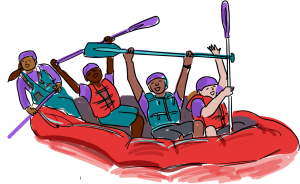
image by Sam Bradd at drawingchange.com
What we learned through the process was that trusted peers and other community-based service provides are a key workforce who are often the first to identify the impacts of infection burden, changing policies, changing/uneven/sporadic resources, sexual practices, and how the ever-shifting composition of the unregulated drug supply is affecting people’s health. The lived and living experience of peers is beneficial at all points in a care continuum, offering a deep well of grounded wisdom and insights. When peers show up in healthcare, they contribute to the empowerment of others who can see themselves in that peer, as well as showing healthcare providers that their patients are cared for and seen. This project is now wrapping up with the completion of a guidance document that was written for and will be mobilized within public health leads and decision makers.
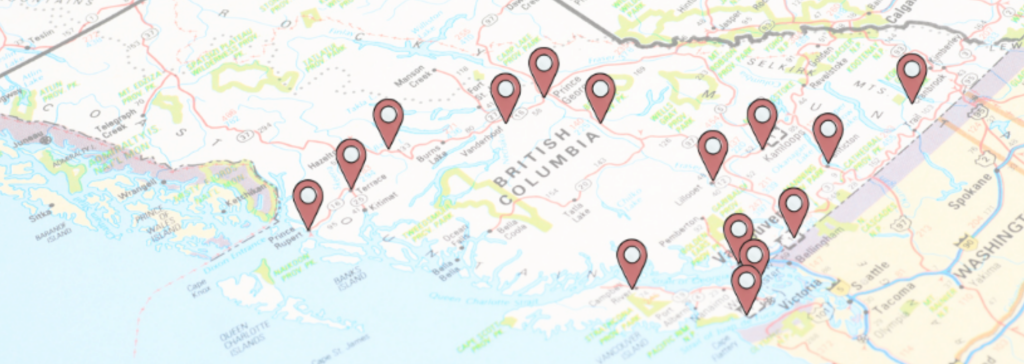
Thrive: Thrive is a 5-year project funded through CIHR that focuses on STBBI health equity for people who use drugs and/or who have experienced incarceration in smaller urban, rural, and remote communities around BC. Thrive follows priorities set by our research team made up of people with lived and living experience, representatives from community-based organizations and health authorities, public health partners, and researchers. Through a mixture of reciprocal capacity building, mutual support, networking opportunities, and community-centred research, Thrive builds on community capacity to strengthen the response to STBBIs in rural and remote communities.
In the first year of this project, Thrive provided 5 mini grants to community teams associated with Thrive to undertake actions in their communities. There are two testing initiatives that are being supported by this funding including testing events on the Sunshine Coast and training for STBBI testing to be integrated within drug-testing services in the Fraser Valley. The other three grants focus on a combination of community engagement and education in Cranbrook, communities around the North, and Kamloops. Thrive will offer these low-barrier mini grants each of the 5 years, and starting next year will be providing larger funding opportunities for community-led implementation science projects.
In hearing from and supporting HIV positive communities:
PLDI: PAN’s Positive Leadership Development Institute (PLDI) is developed, managed, and facilitated strictly by and for people living with HIV (PLHIV). Rooted in the GIPA/MIPA (Greater/Meaningful Involvement of People Living with HIV/AIDS) and “Nothing About Us, Without Us” principles, every member of the PLDI management team and all program trainers are people living with HIV.

PLDI in 2025-2026, had a vibrant year of programming and engagement. We led the way with five trainings and spearheaded a Facilitation Training Pilot (12 participant cohort) using an innovative hybrid format of online and in-person, (Sept-Oct, 2025). The curriculum contained a mix of theory presentation, discussion, and a healthy dose of opportunities to practice facilitation as individuals and in small groups with evaluations drawing high praise.
PLDI delivered two Core Trainings: (totalling 24 participant graduates). One “online” to BC & Western Canada from (Nov-Dec 2025), including participants from BC, Alberta and Manitoba. We also held one “in-person” Core Training, June 1-4, 2026, at Loon Lake, Maple Ridge, BC. We had great diversity in our participant graduates; 19- 65 yrs+, different backgrounds, who identified as Gay, Straight, Gender Diverse, newly diagnosed and long-term survivors with significant participation from the BIPOC and Newcomer communities. One participant attended from a very rural and remote community of the Wuikinuxv First Nation, outside of Port Hardy. As a result of this Core training, we welcomed a successful trainer-in-training to the PLDI BC Program.
PLDI BC also hosted two Advanced Trainings: (totalling 19 participant graduates). One Governance delivered “online” to BC & Western Canada from (Nov-Dec 2025) with participants from BC, Alberta, Manitoba, and Quebec. We held an “in-person” Advanced Communications Training March 2026 in Vancouver. Participants shared inspiring presentations, received their certificates with meaningful representation from the Latinx community. Overall, our advanced trainings were incredibly popular this year, resulting in a 29% increase over our deliverable target.
The past year also included efforts to deepen PLDI BC’s community relationships. PLDI BC had a presence at PAN’s Capacity and Community Building in-person regional training this year in Victoria (March 2026) . PLDI BC also worked in partnership with PAN’s Capacity Building department to hold a webinar in July 2026, Beyond Pride: Sex, Health, Community, and the Future of 2SLGBTQIA+ Life in Canada. Two PLDI grads were very instrumental in developing and delivering very informative and impactful content. A very special thank you to the amazing PLDI BC team for their caring work.
TIE: The TIE Study (Treatment Adherence, Social Isolation, and Engagement) is a community-based research project conducted in partnership with people living with HIV to better understand the connections between social isolation and HIV medication adherence among people living in communities outside Vancouver. Between February and July 2026, the study completed 96 surveys and 33 qualitative interviews with people living with HIV. Emerging findings highlight the prevalence of social isolation and loneliness, the ongoing impacts of stigma and mental health, and the importance of community connections and access to supportive services. These findings offer valuable insights into the experiences of people living with HIV and opportunities to strengthen supports in smaller communities. We are looking forward to presenting more detailed results at the 2027 Canadian Association for HIV Research Conference (CAHR) in Montreal and sharing community-facing knowledge mobilization in the coming weeks and months.
At the heart of PAN’s work is the meaningful change that only happens because of community and originates from the voices and leadership of people with lived and living experience. Across BC, people living with HIV and community-based organizations bring essential knowledge of obstacles and inequities, as well as vital power and strength that inform our collective advocacy, research, and programming. Fundamentally, this ensures that responses to HIV are grounded in community priorities and reflect the diversity of people and places across the province.
Events happening across BC for World AIDS Day and Indigenous AIDS Awareness Week:
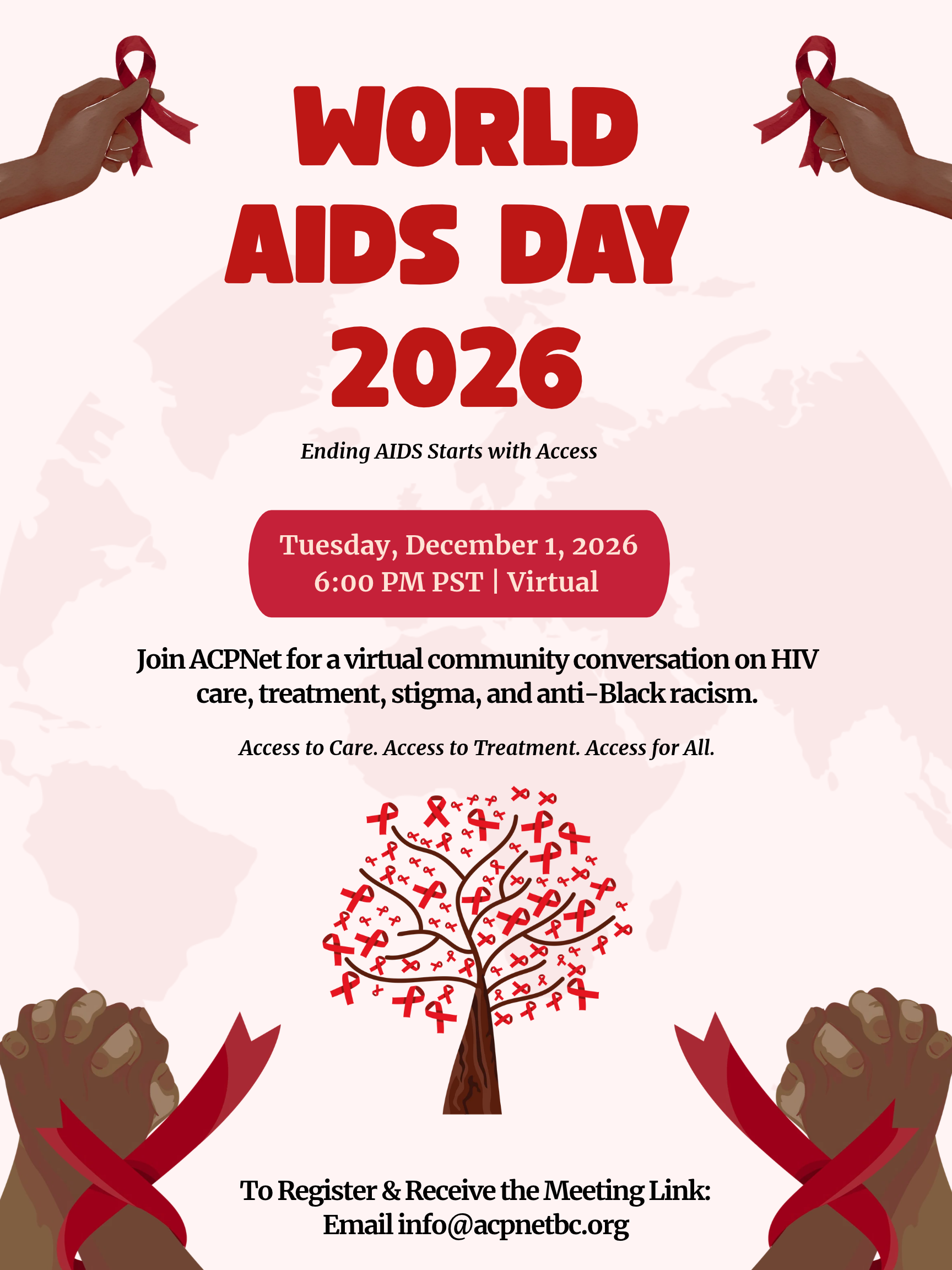
Virtual Community Conversation with ACPNet
The Afro-Canadian Positive Network (ACPNet) will be hosting a virtual community conversation on December 1, 2026, at 6:00 PM Pacific Time, to mark World AIDS Day.
This year’s theme is “Ending AIDS Starts with Access.” The event will bring together healthcare professionals and community members to discuss access to HIV care and treatment, as well as the impact of stigma and anti-Black racism on African, Caribbean, and Black communities. *click on image to view
Anyone interested in attending can register by emailing [email protected]. ACPNet will share the meeting link with registered participants.
Community Pop-Up Table in Cranbrook with ANKORS
On December 1, ANKORS East Kootenay and K-POP Outreach will be setting up a community pop-up table downtown Cranbrook by the clock tower to honor those we have lost to HIV/AIDS and those impacted by HIV/AIDS, celebrating how far we’ve come, and discussing the importance of continued testing. ANKORS will be giving out hot chocolate to the public along with ribbons, and of course having conversations.
For more information or to donate to ANKORS you can email Polly Sutherland, Team Lead at [email protected] or drop by their office at 1324 2nd street north!
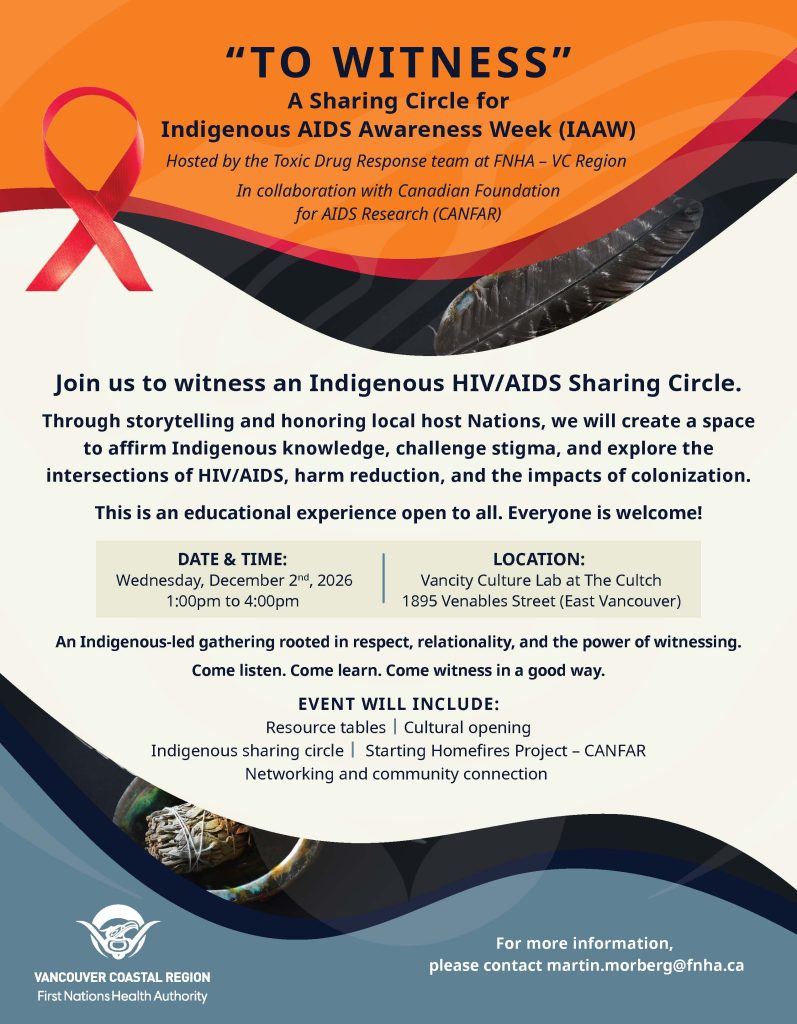
“TO WITNESS” A Sharing Circle for Indigenous AIDS Awareness Week (IAAW)
All are welcome to join the Toxic Drug Response team at First Nations Health Authority (FNHA) (Vancouver Coastal Region) in collab with Canadian Foundation for AIDS Research (CANFAR) for an Indigenous-led gathering rooted in respect, relationality, and the power of witnessing.
When: Wednesday, December 2, 2026 from 1:00 to 4:00 PM Pacific Time
Where: Vancity Culture Lab at The Cultch (1895 Venables Street, East Vancouver)
*click on image for more details