

It’s true – Hepatitis C can be cured!

Hepatitis is the inflammation of the liver, which is most often caused by a viral infection (Hepatitis A, B, C, D, and E). Each virus is spread differently, stays in our body differently, and can be prevented or treated in different ways. This page focuses on Hepatitis C. For more information on the other types of hepatitis viruses, check out these resources:
What is Viral Hepatitis: World Hepatitis Alliance
Types of Viral Hepatitis: University of British Columbia
Other Types of Hepatitis: CATIE
Hepatitis C (or Hep C):
Hepatitis C is passed through blood 🩸
Unless you are aware of the specific activities that may have exposed you to the Hep C virus, you will probably not know you have it. Sometimes symptoms don’t start until 10 to 30 years after being infected. This is because our liver can keep doing its job for a long time, even when it is inflamed or damaged.

Our livers are so important. They help our body fight infections, break down toxins like alcohol and drugs, digest food, and more. The problem of not knowing your Hep C status, even if you don’t experience symptoms or feel sick, is that your liver will continue to be inflamed to the point where it can eventually become permanently scarred and unable to do its job.
Hep C is most often caught when people share drugs or injection drug equipment. There is a chance to spread Hep C when sharing smoking equipment if lips are cracked and bleeding or if a pipe is broken and sharp, when receiving tattooing or piercings from unsterile equipment, or through unprotected sex if blood is present.
How does testing for Hep C fit into your life?
We all engage in risk as human beings. We make choices for ourselves everyday based on our needs, wants, and sometimes, our survival. We cannot always avoid risk but understanding how we might be exposed to Hep C can help us make decisions about how to take care of ourselves and our community by getting tested.
-
- If you have never been testing for Hepatitis C, consider getting tested to know your status for sure.
-
- If you are someone who doesn’t identify with the activities that Hep C is often spread through, testing for all sexually transmitted and bloodborne infections before entering any new sexual relationship, or routinely when sexually involved with multiple people, can be a beneficial practice to adopt.
-
- If you are someone who does engage in activities that are known to have Hep C risk attached to them, you may want to consider how you can prioritize testing for Hep C on a regular basis (e.g. every 6 months) and/or after events where you are aware of a potential exposure.
What testing can tell you:
- An antibody test is about checking your immune system. These tests check for a protein your immune system makes in your body if you have ever been exposed to the Hep C virus. This test is helpful but does not tell you if you have a current infection.
- An RNA (ribonucleic acid) test is about finding the virus. These tests check if the virus is still in your body or not, and how much virus is there.
So, which one is for you?
An antibody test is a good test for you to know your status. This is sometimes called a screening test. Once your body is exposed to Hep C, even after you’ve been treated for the virus or your body has cleared it on its own, you will test positive for the antibody, because this is something your immune system has made.
An RNA test is a good test if you have ever had a positive antibody test. This is sometimes called a diagnostic test because it is needed to confirm a Hep C infection.
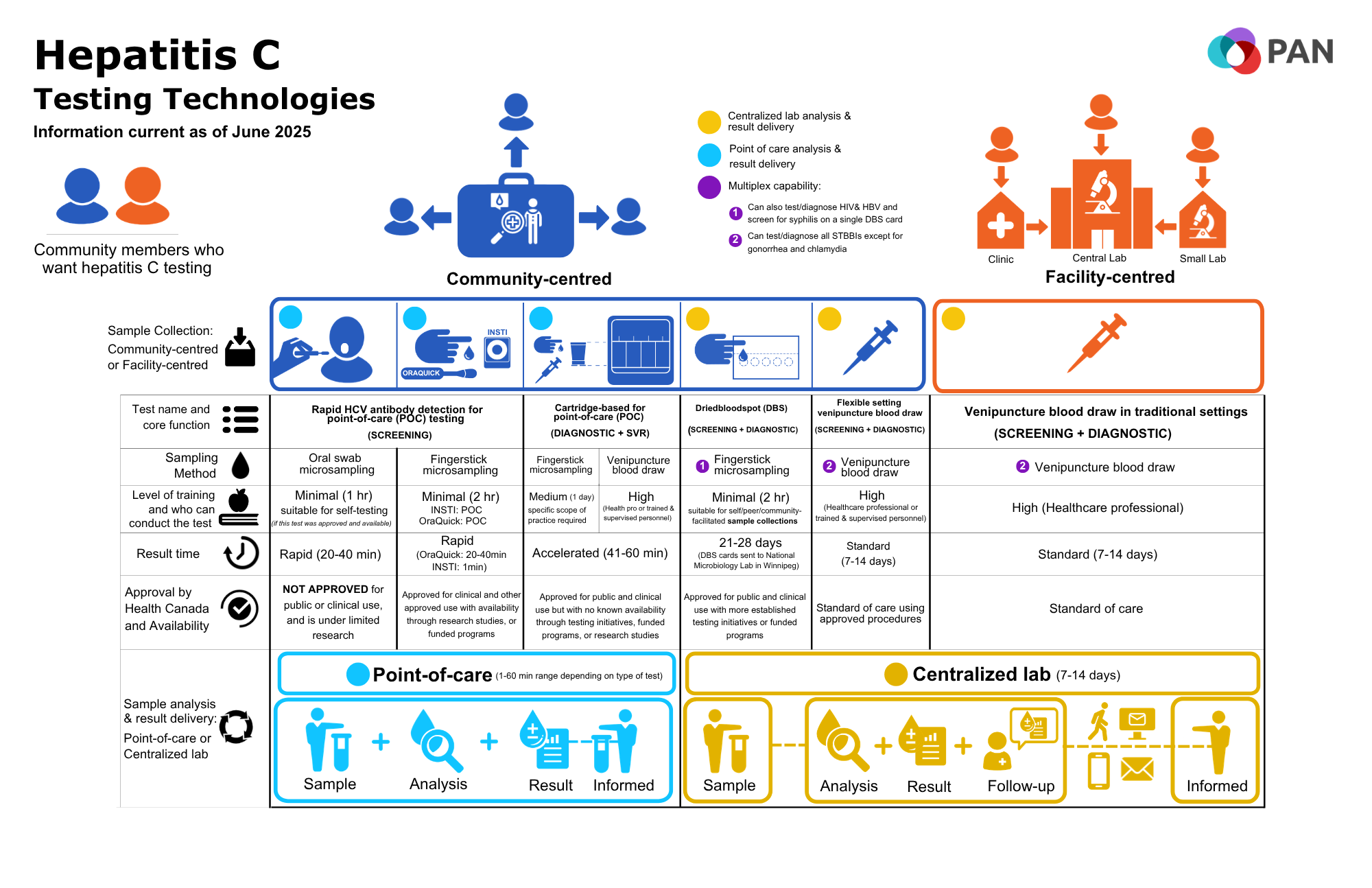
Check out this PAN resource on different antibody and RNA testing options (on page 2).
Treatment Options:
There is no vaccine for Hepatitis C, but there is a treatment for it. If you’ve ever met someone who was treated for Hep C in the past, they may use the word ‘Interferon’ and describe treatment as being hard. And it was!

But current treatments like Epclusa or Maviret are very different. These treatments are pills that are taken once a day (for as little as 8 to 12 weeks, but sometimes a bit longer), have fewer and less severe side effects, and have cure rates higher than 95%.
Hep C treatment does not make you immune to getting Hep C again. Most bodies will always be susceptible to the Hepatitis C virus, no matter our immune status or treatment history. But you can access treatment for Hep C more than once; whenever you have an active infection.
If and when you have an active Hep C infection, a healthcare provider can help you decide which treatment is best for you and set up the ways to get your treatment (Hep C treatment usually stays at a pharmacy where it can be picked up or delivered daily or weekly depending on what fits your life best).
When should you start treatment?
At PAN we believe you should start treatment as soon as possible but acknowledge that treatment is a big and personal decision. You do not have to stop using drugs to start treatment. But remember that being on treatment does not protect you from ongoing Hep C exposure risks.
If you are already accessing a pharmacy regularly for weekly blister packs, medications that need to be witnessed daily, or receiving regular injections, Hep C treatment can feel easy to add onto your regular routine.
If you are not someone who is used to taking pills every day, connecting your treatment to a daily habit you already do can help you remember.
Treatment does not need to be perfect. Peers and healthcare providers in your community can help you navigate missed doses if and when they happen.
More resources:

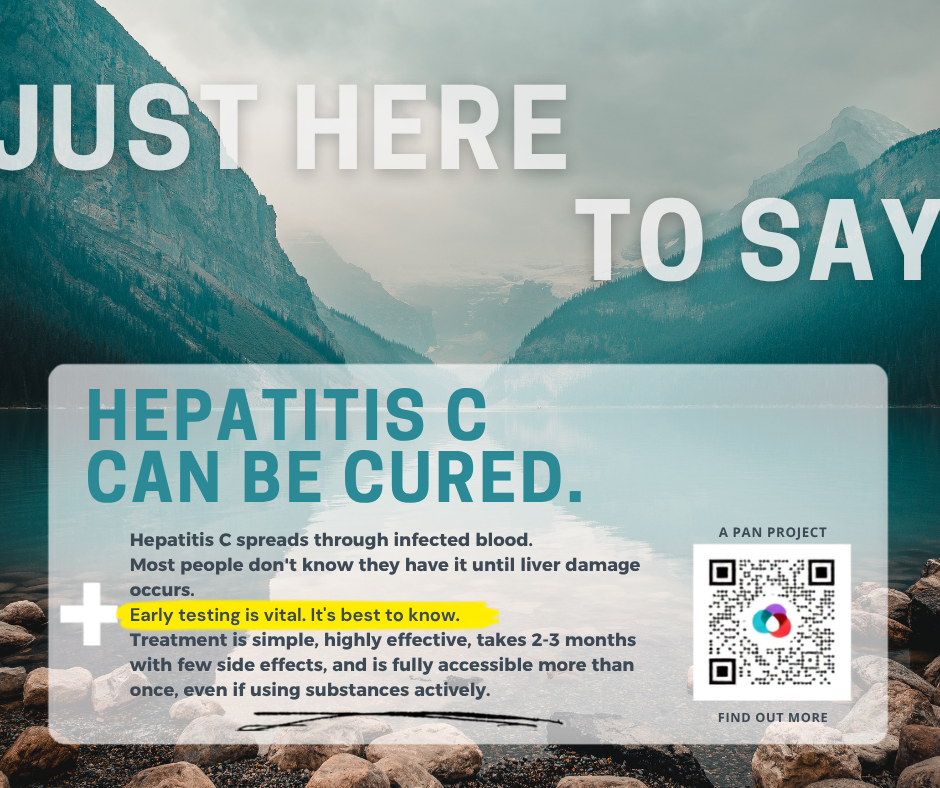
Postcard project – downloadable Facebook post

Postcard project – downloadable X post

When more people know their status and access treatment when they need it, our communities are healthier and benefit from less infections being spread. BC and Canada want to make this happen! To learn more, check out what others are saying about how together we can eliminate viral hepatitis:
Informing Viral Hepatitis Elimination Efforts in British Columbia: What We Heard
Progress Toward Viral Hepatitis Elimination in Canada: 2025 Report