
Written by Marc Seguin
Every summer, rainbow flags appear across Canada. Streets fill with parades, festivals, drag performances, community gatherings, and celebrations of queer joy. Pride Season offers a visible reminder of how far 2SLGBTQIA+ communities have come in the fight for recognition, equality, and human rights.
But what happens after the parade ends and the rainbow flags come down?
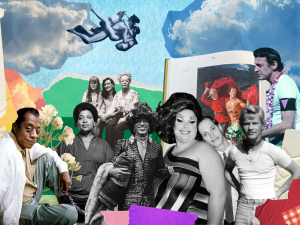
That question was at the heart of PAN’s webinar Beyond Pride: Sex, Health, Community, and the Future of 2SLGBTQIA+ Life in Canada. Rather than asking participants to simply celebrate Pride, the webinar invited a deeper conversation about where Pride came from, what it has become, and where queer communities in Canada are headed next. The answer begins with remembering that Pride was never only a celebration.
From Resistance to Recognition
Modern Pride traces its roots to the 1969 Stonewall Uprising in New York City, when members of the LGBTQ+ community resisted police harassment and discrimination. Stonewall became a catalyst for a global movement that demanded visibility, dignity, and liberation.
You can read more about Stonewall here:
- Library of Congress Research Guides: 1969: The Stonewall Uprising
- Zine Education Project: June 28, 1969: Stonewall Riots
- The Pink News: What were the Stonewall Riots? The story of the historic demonstrations
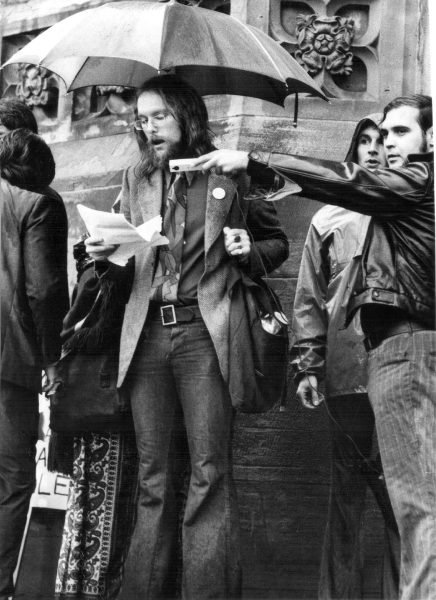
Image citation: Jearld Moldenhauer, “Charlie Hill Reading the Demands,” The ArQuives Digital Exhibitions
Canada’s story unfolded quickly afterward. In 1969, homosexuality was partially decriminalized. In 1971, activists organized the We Demand demonstration in Ottawa, one of the first large-scale public actions for gay and lesbian rights in the country. Early Pride events were often small, political, and risky. Participants marched despite social stigma, employment discrimination, police surveillance, and threats to their safety.
One of the webinar’s central questions Are Pride festivals still protests? cannot be answered without this history. Pride emerged because queer people were excluded from public life. The parade itself was once a radical act of visibility.
Today, Pride festivals attract millions of participants, major corporate sponsorships, and government proclamations. For some, this reflects extraordinary progress. For others, it raises concerns about commercialization and whether the movement’s original purpose has been diluted.
On August 9, 2026, Montreal hosted two separate Pride events that symbolized a movement at a crossroads. The official 20th anniversary Fierté Montréal parade drew large crowds, sponsors, and institutional support, celebrating decades of progress and visibility. On the same day, a grassroots “Wild Pride” march took place with a different message: reclaim Pride as a protest movement rooted in anti-capitalist, anti-colonial, and community-based activism. The existence of two Pride marches in the same city was not simply a scheduling coincidence; it reflected a broader conversation about what Pride is for and who it serves.
The reality is that both perspectives can be true. Celebration and protest have always coexisted within queer movements.
The Progress We Should Not Take For Granted
Another webinar question asked: What would have shocked 2SLGBTQIA+ activists 20 years ago about today’s realities? Many earlier activists would undoubtedly be astonished by the legal and social changes that have occurred. Same-sex marriage has been legal across Canada since 2005. Human rights protections have expanded. More openly queer and trans people hold public office, lead organizations, and shape cultural life.
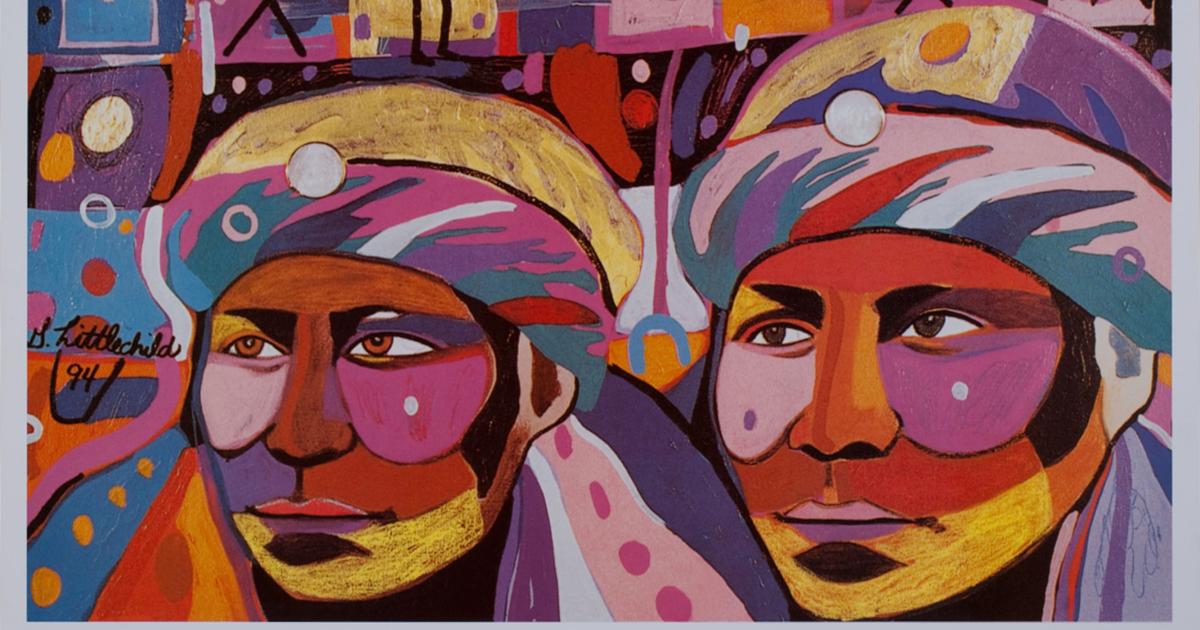
(Painting by George Littlechild, 1996. from: https://humanrights.ca/story/what-two-spirit-part-one-origins)
The visibility of trans, non-binary, and Two-Spirit communities has also grown significantly, broadening public understanding of gender diversity and Indigenous perspectives on identity and belonging.
Yet earlier activists might also be surprised by the persistence of many old struggles in new forms.
This conversation became even more urgent this past summer. In July 2026, Berlin’s Christopher Street Day celebrations were shattered when a vehicle was driven into crowds attending Pride events, killing one person and injuring many others. The attack sent shockwaves through queer communities across Europe and beyond, reminding many that Pride remains a visible target for hatred and extremism. For a city often celebrated as one of the world’s most queer-friendly capitals, the violence was a painful reminder that progress does not eliminate vulnerability. Pride can still require courage.
Inclusion Is Not A Finished Project
The webinar explored whether the queer community is becoming more inclusive or more divided. This is one of the most complex questions facing 2SLGBTQIA+ communities today.
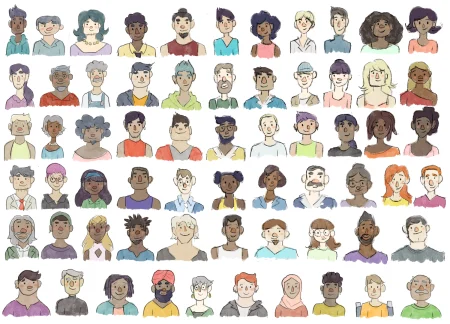
image credit: Jenn Lee from: https://www.utm.utoronto.ca/alumni/news/humanizing-experience-hiv-stigma-through-animation
Greater visibility has created space for more identities, experiences, and voices to be recognized. At the same time, communities continue to grapple with racism, colonialism, ableism, transphobia, class inequality, ageism, and exclusion within queer spaces themselves.
The idea of a single, unified LGBTQ+ community has always been somewhat of a myth. Queer communities are diverse, intersectional, and shaped by different histories and social realities. A Black queer newcomer, a rural gay senior, a Two-Spirit youth, a trans woman living with HIV, and a disabled bisexual parent may all experience Pride and Canada very differently.
Meaningful inclusion requires more than representation. It requires equitable access to health care, housing, safety, community leadership, and decision-making.
The Unfinished Work of Health Equity
Pride history cannot be separated from health.
The HIV/AIDS crisis transformed queer organizing in Canada and around the world. Community members cared for one another when governments and institutions often failed to respond adequately. Activists demanded treatment access, research funding, compassionate care, and an end to stigma.
That legacy continues today, but it has also evolved. Organizations across Canada increasingly recognize that the HIV response is strengthened when people living with HIV are not only recipients of services, but leaders, educators, advocates, and decision-makers.

The Positive Leadership Development Institute (PLDI) is one example of this ongoing legacy. By and for people living with HIV, PLDI develops leadership skills, resilience, peer support, and community engagement, empowering participants to use their lived experience to strengthen communities and challenge stigma. More than 1,000 HIV-positive leaders have graduated from the program across Canada, many of whom have gone on to become facilitators, board members, advocates, and community leaders. The webinar itself reflected this continuum of leadership, featuring three PLDI graduates whose presentations demonstrated how lived experience, when supported through peer leadership, can become a powerful force for education, inclusion, and social change. PLDI reminds us that the future of HIV and 2SLGBTQIA+ advocacy depends not only on policy and medicine, but on cultivating the next generation of community leaders.
Many 2SLGBTQIA+ people still encounter barriers in health care, including discrimination, lack of culturally safer services, inadequate sexual health information, and mental health inequities. Research consistently shows that queer and trans communities experience disproportionate burdens related to stigma, social isolation, and minority stress.
However, Canadian research is increasingly showing that community belonging, peer support, and affirming social connections are among the strongest protective factors for 2SLGBTQIA+ wellbeing. Studies have found that a strong sense of belonging can reduce mental health disparities, while peer-led programs and inclusive community spaces foster resilience, leadership, and collective wellbeing across diverse queer and trans communities.
Some related research and resources:
| Facts, stats, and impact: 2SLGBTQI+ communities | Programs and interventions promoting health equity in LGBTQ2+ populations in Canada through action on the social determinants of health |
| Review of current 2SLGBTQIA+ inequities in the Canadian health care system | Beyond the binary: Supporting 2SLGBTQIA+ mental health with pride |
| The TRANScending love arts-based workshop to address self-acceptance and intersectional stigma among transgender women of color in Toronto, Canada: Findings from a qualitative implementation science study | Strong community belonging moderates poor mental health in lesbian, gay, and bisexual individuals living in Canada: an intersectional analysis of a national population-based survey
(Dulai, Salway, & Ablona, 2023) *not open access* |
| 2S/LGBTQ+ Health Hub | |
For organizations such as PAN, health is not only about clinical services. It is about community connection, peer leadership, harm reduction, and creating environments where people can access care without fear or judgment.
This is where the webinar moved beyond history and into the future.
Social Media: Connection and Fragmentation
One of the most engaging discussions centered on the question: Has social media strengthened or weakened 2SLGBTQIA+ communities?

For many people, especially youth, social media has been life-changing. It has allowed isolated individuals to find community, access affirming information, explore identity, and connect across geographic boundaries.But digital spaces can also amplify misinformation, harassment, polarization, and unrealistic expectations about identity, activism, and belonging. Online communities can create connection while simultaneously contributing to fragmentation and burnout.
The challenge is not choosing between online and offline community. The challenge is ensuring that digital connection does not replace the deeper relationships built through mutual aid, peer support, local organizing, and shared community spaces.
Beyond Pride
Perhaps the most important insight from the webinar is that Pride is not an endpoint.
The future of 2SLGBTQIA+ life in Canada will be shaped by the choices communities make now:
- how we respond to rising anti-2SLGBTQIA+ rhetoric
- how we support trans and gender-diverse people
- how we honour Two-Spirit leadership
- how we address health inequities
- and how we build solidarity across generations and identities
PAN’s work has long recognized that community leadership is essential to public health. Peer-led education, advocacy, and leadership development are not secondary activities they are fundamental strategies for creating healthier, more resilient communities.
Pride began with ordinary people who believed that another future was possible.
The question now is whether we are willing to build it.
Moving beyond Pride means moving beyond symbolism. It means investing in community organizations, supporting peer leaders, challenging stigma, strengthening health equity, and creating spaces where every 2SLGBTQIA+ person can belong, lead, and thrive.
Sure the rainbow flag matters.
What we build beneath it matters even more.
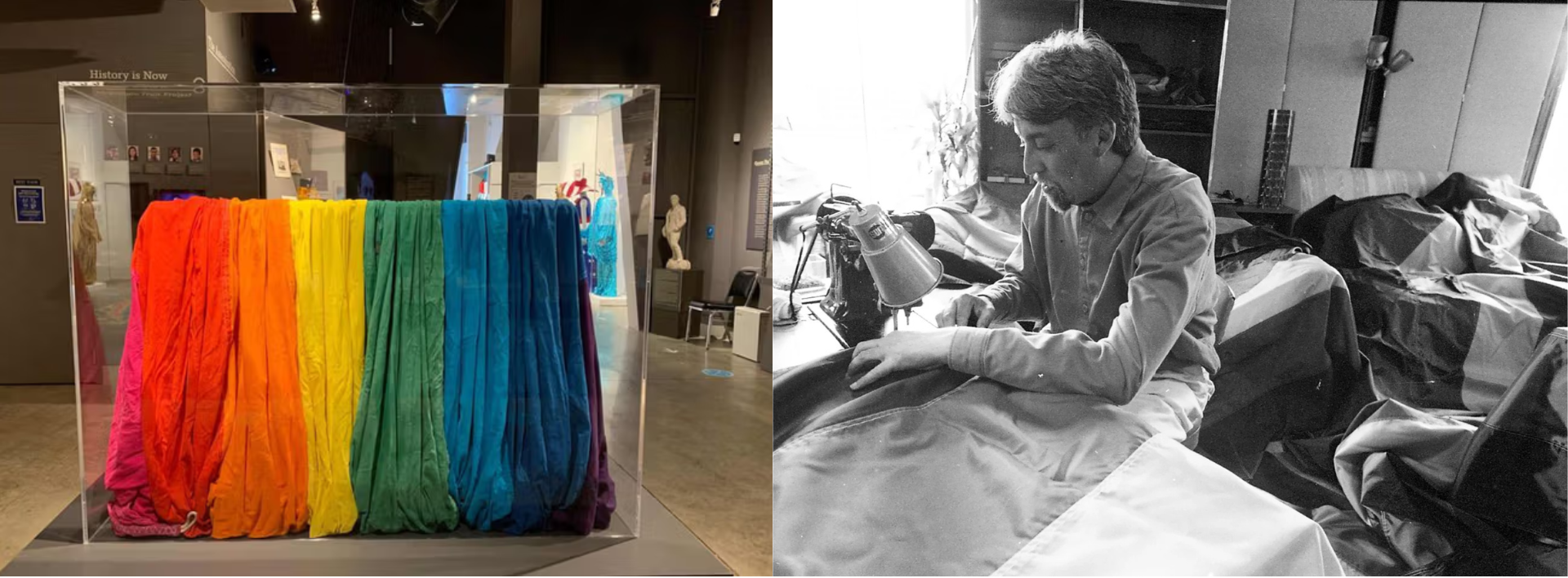
(images from: https://www.theartnewspaper.com/2021/06/17/original-1978-rainbow-flag-designed-by-gilbert-baker-acquired-by-san-franciscos-glbt-historical-society and https://www.cnn.com/2022/06/24/world/gallery/pride-flag-history )