
Written by Emily Taylor-Lariviere
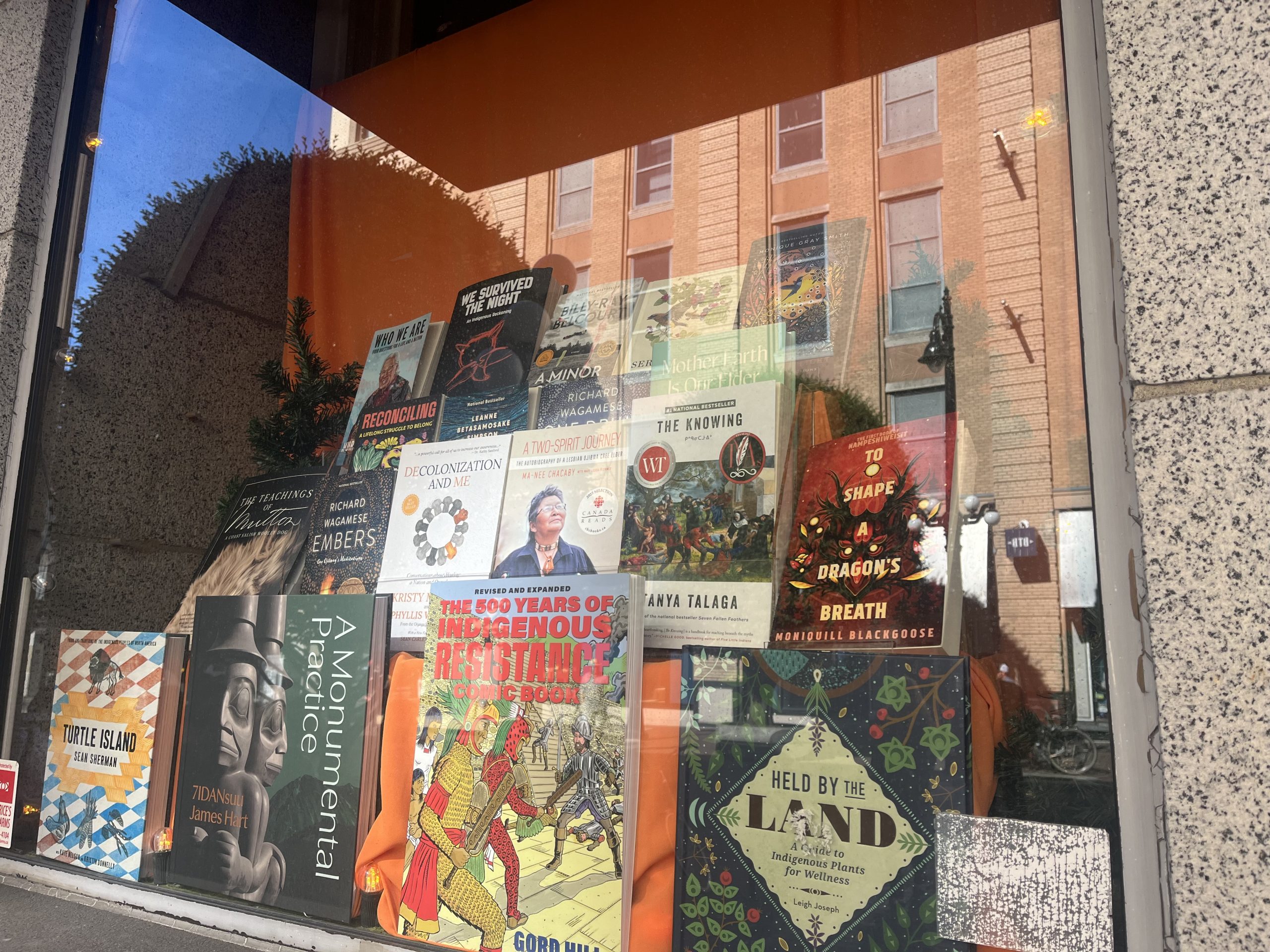
Window display at Munro’s Books in Victoria, BC.
Books are more than just entertainment — they train us in the art of being human. When we read, hear, or watch stories we are practicing empathy and expanding the ways we can emotionally understand one another.
In honour of National Indigenous Month and Day 2026, I’d like to take some time to extend my deep appreciation for Indigenous literature across Turtle Island. As Maya Angelou said: “Easy reading is damn hard writing” and all the authors mentioned in this post are masterful in the art of easy reading.
This post is also written in deep thanks to two Métis scholars who invited me to the works of many of the authors I’ve featured today — and who are a big encouragement for me to keep reading, learning, and tapping into creativity and imagination. Thank you to my friend Sydney Hamilton and a past professor of mine at the University of Victoria, Lindsay Dupré Fiddler. Ay-ay and Maarsii to you both.
Billy-Ray Belcourt
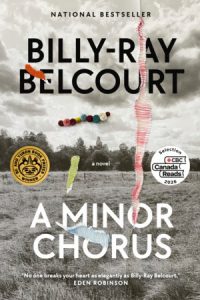
Billy-Ray Belcourt may be a name familiar to you this year, as his book A Minor Chorus was a finalist in CBC’s 2026 Canada Reads Competition. Billy-Ray Belcourt is a writer and academic from the Driftpile Cree Nation in Northwest Alberta.
Billy-Ray Belcourt’s doctoral research included a thesis titled The Conspiracy of NDN Joy: Essays on Violence, Care, and Possibility. This is certainly daunting to approach on the description of PhD work — but the 179 pages of his writing can be chunked into sections of essays he outlines in the table of contents. Please take a look, you may find something that pulls you in!
Other published works from Billy-Ray Belcourt include: the idea of an entire life (poems), coexistence (short stories), A History of My Brief Body (memoir), NDN COPING MECHANISMS (poems), and This Wound is a World (poems). All of which can be found with hyperlinks on his website.
Tenille Campbell
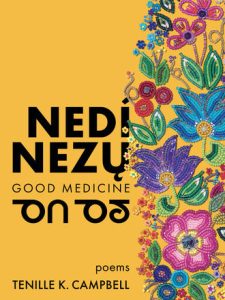
If you are partial to poetry, you may also enjoy the work of Dr. Tenille Campbell. Tenille Campbell is a Dene and Métis author, photographer, and multidisciplinary artist from English River First Nation.
Her work includes:
#IndianLovePoems. This is described as “more than a collection; it’s a fearless celebration of Indigenous desire. It’s for anyone who has ever searched for connection in the digital age, lived through the humour of a bad date, or found profound truth in a temporary embrace”. You can also read an interview about this compilation between Tenille Campbell and Jordan Abel in Yarrow Magazine here.
And nedi nezu. This collection is noted to “capture the chaotic energy of moving from thirsty DMs and “double-tap” flirting to soul-shaking, erotic encounters under the northern stars”.
From Speculative Fiction, to Sci-Fi, to Fantasy in Indigenous literature
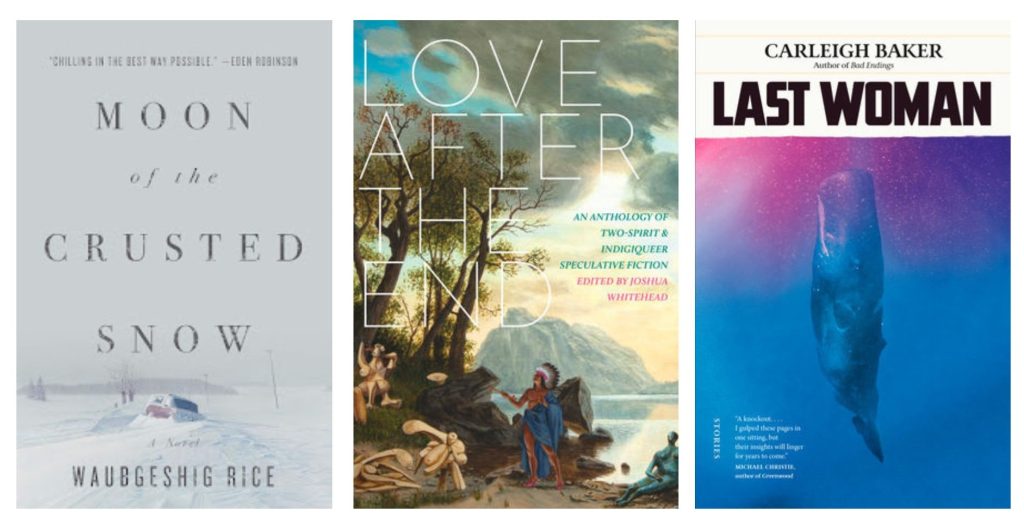
Books like Waubgeshig Rice’s novel Moon of the Crusted Snow, Joshua Whitehead’s (editor) anthology Love After The End, and Carleigh Baker’s collection of short stories titled Last Woman are great invitations into future thinking and fantastic imagination. I have recently been diving into science fiction as a personal and academic curiosity. Science fiction can sometimes glamorize colonization as an adventure story or make extra-terrestrials seem threatening. Other times, dystopias in science fiction like that of Big Brother in George Orwell’s Nineteen eighty-four, can instill a fear for the continuation of oppressions:
“If you want a picture of the future, imagine a boot stamping on a human face. Forever.” (excerpt from Orwell’s 1984).
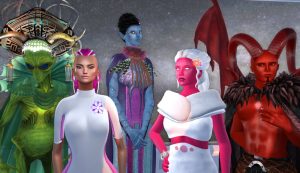
Skawennati, Family in the Sky, 2017, from The Peacemaker Returns, machinimagraph.
But Indigenous futurisms look at the future and imagine a way forward from colonialism and fears of the unknown. Indigenous futurism, a nod to Afrofuturism (Met Museum, CBC Listen), was first coined by Grace Dillon to describe work that centers the generative presence of Indigenous lives, cultures, and spirituality in future settings. Dillon credits Anishinaabe writer Gerald Vizenor‘s 1990 science fiction novel Bearheart: The Heirship Chronicles as the beginning of Indigenous futurism.
In Waubgeshig Rice’s novel, Moon of the Crusted Snow, the main character Evan is reminded by his elder that even in a sense of apocalypse, existence continues through the ending of a world:
“Yes, apocalypse! What a silly word. I can tell you there’s no word like that in Ojibwe. Well, I never heard a word like that from my elders anyway…Our world isn’t ending. It already ended…Apocalypse. We’ve had that over and over. But we always survived. We’re still here. And we’ll still be here, even if the power and radios don’t come back on and we never see any white people ever again”. (excerpt from Rice’s Moon of the Crusted Snow)
Chelsea Vowel
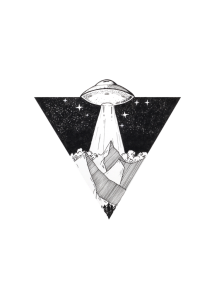
Other important futurism work comes from Chelsea May Vowel. In Chelsea May Vowel’s Master of Arts thesis titled Where No Michif Has Gone Before: The Form and Function of Métis Futurisms, the author wrote four speculative fiction short stories as an exercise in worldbuilding and imagining otherwise (much like Belcourt’s thesis — this is an accessible way to read an entire thesis!). Chelsea Vowel’s work on Métis Futurisms also brings awareness to the limitations of thinking in pan-indigenous terms. Vowel noted the work of author Nnedi Okorafor who distinguishes her work as Africanfuturist rather than Afrofuturism. This is not about siloing and separation, but about the empowerment of defining oneself and one’s future — which can provide space for others to do the same.
Here are some other Indigenous authors who write fantasy, science fiction and other forms of speculation you may want to check out:
Cherie Dimaline
Daniel Heath Justice
Darcie Little Badger
Eden Robinson
This is certainly not an exhaustive list of Indigenous writers, but one that I hope can providing a starting point for your own reading journey and exploration. It is a sincere privilege to be able to access the wisdom and knowledge these and many other Indigenous authors dedicate themselves to transcribing through words and story; a format which offers a welcoming place to unpack ways of thinking, consider other perspectives, and holds our attention long enough for the important work to begin. I acknowledge my lack of Inuit representation in this post. While I do enjoy the mapping of worlds by visual artist Shuvinia Ashoona, and recently found Unikkaaqtuat: An Introduction to Inuit Myths and Legends by Neil Christopher and Germaine Arnattaujuq, I have my own work to do and much more to learn.
Want to get in touch with me — please reach out!
Emily Taylor-Lariviere, Capacity Building Specialist