
Antonio is a former staff member of PAN.
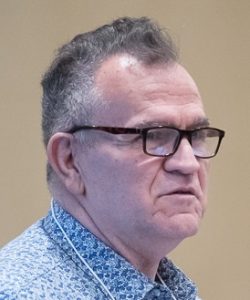
Antonio Marante has been involved with PAN on various levels- as a member on the Board, and as a Peer Researcher on the BC People Living with HIV Stigma Index Project. He worked on knowledge translation with the Stigma Index Project.
What first piqued your interest in the HIV sector?
I am a person living with HIV for 19 years. I was born in Caracas, Venezuela. Being a gay male living with HIV in Latin-America is a challenging experience. I experienced discrimination from friends and potential partners because I am HIV positive, and realized education is crucial to stop this discrimination. The first impact of discrimination in Venezuela is that I paid all costs for my HIV medications and HIV tests for five years because I feared being fired from work if I disclosed my HIV status. The health insurance was private and administered by the company I worked for. Consequently, I used all my savings for my HIV medications, doctors’ visits, and lab tests. Furthermore, I started being educated about HIV in sessions with my doctor, and HIV organizations in Venezuela. My family joined me in this process.
I started my HIV journey with fear and a lack of knowledge. I consider myself, 19 years later, as a researcher in HIV, focusing and analyzing facts to improve HIV programs, and we, as people living with HIV have the duty to stay healthy, following our treatment as prescribed by healthcare workers. Additionally, I am an active participant in co-creating my health care. I started this HIV journey because my ex-partner died, and confirmed my HIV status in a test 8 years later. I found out more and more about HIV, including clinical and community information. I have taught individuals to be the center of their healthcare service.
I changed my perspective from the victim side to be a leader in the HIV community; bringing my knowledge; connecting my heart to many other hearts having a need for understanding, respect and love. My journey started with death. Today, there is HIV undetectability which provides clinical proof that HIV is not transmitted if the person with HIV has an undetectable viral load, meaning there are less than 40 HIV copies per cubic centimeter of blood. Research studies, e.g. partner study, demonstrate HIV is not transmitted in these scenarios. I celebrate this good news, and our active role in this new era. There are still many challenges connected to HIV such as criminalization and duty to disclose your HIV status to government officials if you are applying for immigration. I currently sit on the Board of Director at AVI, VPWAS, and PAN. Moreover, I’ve worked as a Peer Research Associate and now as Knowledge Translator for the Stigma Index project at Pacific AIDS Network.
How do you see the impact of your work in the “real world”?
I have invested at least 30 years of my life as a student. I understand business, non-profit, and government worlds. These three perspectives support my connections and interests in communities, how to understand and to document their needs and how to satisfy them. I am learning community-based research principles, managing qualitative research applied to communities. The intersection of business, non-profit, and government is connection in knowledge, interests, and participants. I think this area requires attention. Additionally, we need to pay attention to the area where each sector works alone. I am working inside and outside this intersection, providing tools for organizations and individuals improving their projects and needs.
How do you engage the community in your work?
I am a researcher but also, I am a person with feelings, challenges, passion, and hope. I can move from being a thinking person to a totally passionate guy, connecting my thoughts and feelings, and body sensations. Every time I talk with someone, I make connections beyond numbers, beyond the thinking world. I am empathetic with others trying to understand their world, what they experience, and how they manage their challenges. Victoria has been a school for me to connect to spirituality, understanding we are living this human experience for a final divine life. My research work experience connects science to communities and non-profit organizations goals and methods. My spiritual learning connects me to people’s hope or their results in life, co-creating with them a harmonious place to live.
If you had unlimited funds, which area would you invest in?
If I won the lottery, I would start to pay my debts first. In addition, I would put money towards developing more tools in the community to communicate better. I think the human thinking process sometimes creates obstacles to be an active listener. I would invest money in providing free training related to compassionate communications, developing communities’ skills and implementing change from feedback. It means, both the sender and receiver of the message understand each other. As a result, community members obtain what they ask, and organizations perform their duties to respond to stakeholders’ needs with no communication channel noise. Doing this, we are co-creating a more harmonic world in which to live.
If you were able to choose, what is the natural talent or superpower you’d like to be gifted with and why?
I really want colour to my feelings, and to see them with my physical vision to detect what colors express each emotion, then connecting to people’s colours looking at a variety of feelings. How can it be possible see my emotions: love, compassion, and forgiveness? How do I transform anger, fear, and resentment into positive feelings and living this experience pain free?
Meet Antonio online when he presents a webinar on January 30: Bringing Research Home: Findings from Positive Living Positive Homes and BC Stigma Index