
Update (December 15, 2025) : BC-CfE’s World AIDS Day 2025 event recording now available!
On Monday, December 1st, 2025, the BC Centre for Excellence in HIV/AIDS (BC-CfE) alongside the Health Initiative for Men (HiM), Pacific AIDS Network (PAN) and Providence Health Care (PHC), marked World AIDS Day at St. Paul’s Hospital with a passionate call to action as the HIV response in Canada sits at a crossroads.
Moderated by PHC President & CEO Fiona Dalton, BC-CfE Executive Director & Physician-in-Chief Dr. Julio Montaner’s presentation on the changing landscape of HIV, was followed by a panel discussion with HIM Executive Director Aaron Purdie and PAN Executive Director Evin Jones highlighting the critical need for research and community to join together to bring HIV back to the forefront of the world’s attention.
If you weren’t able to join in person, but want to get inspired, the full presentation and panel discussion is now online:
original post (December 8, 2025)
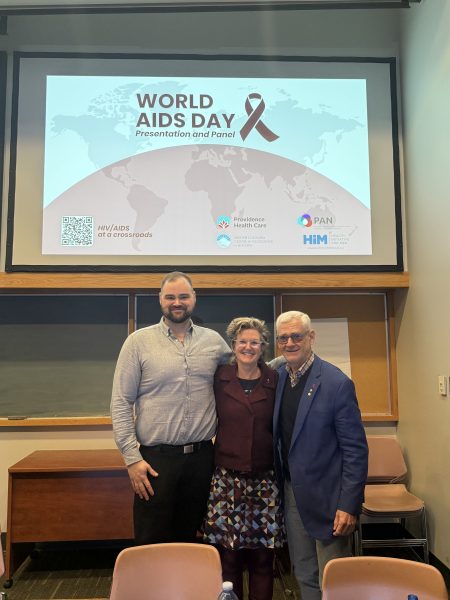
On December 1st, PAN was grateful to be invited to participate in a World AIDS Day event hosted by the BC-Centre for Excellence (BC-CfE) at St. Paul’s Hospital. Dr. Julio Montaner, the Director of the BC-CfE, opened the event with a presentation, followed by a panel presentation with PAN’s Executive Director Evin Jones and Aaron Purdie, Executive Director of Health Initiative for Men (HIM). The panel explored the state of HIV in BC and what is needed to reach our shared 95-95-95 goals. This reminds us that BC’s HIV response is strongest when all parts of the system work together.
The Importance of Marking World AIDS Day and Indigenous AIDS Awareness Week (IAAW)
The BC-CfE’s World AIDS Day 2025 Presentation and Panel was opened by Providence Health President and CEO, Fiona Dalton, who noted how rare UN-recognized days are for specific diseases – and how that makes World AIDS Day especially meaningful. She invited everyone to remember those lost worldwide, celebrate the progress made over the last few decades, and recommit to the urgent work ahead at this “crossroads” moment. Premier David Eby was unable to attend the event but sent a statement to be read aloud.
Evidence, Equity and Urgency: Highlights from Dr. Montaner’s Presentation
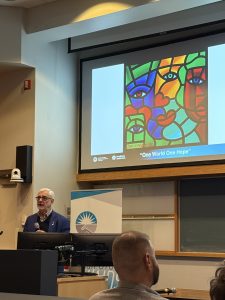
BC-CfE’s Dr. Julio Montaner reflected on BC’s dramatic progress since introducing Treatment as Prevention® (TasP), which transformed the province from having one of the worst HIV epidemics in the 1990s to achieving world-leading outcomes. BC remains the only province to have surpassed all components of the 90-90-90 targets—and he stressed that meeting all three is essential to achieving true public-health benefit. While new infections linked to BC transmission clusters continue to decline, he warned that the overall situation is concerning.
Dr. Montaner called attention to rising HIV rates across every major Canadian province and urged federal decision-makers to recognize that current national reporting obscures the real trends. On prevention, he emphasized that global access to PrEP is far below what is needed, calling prejudice the only explanation for such limited availability. No one, he noted, should be denied HIV prevention “any more than a woman should be denied birth control.” Cuts to HIV funding—such as Argentina’s recent withdrawal of PrEP support—risk pushing infection rates back to levels not seen since the 1990s.
Dr. Montaner also pointed to new innovations, including France’s rollout of a gonorrhea vaccine and progress on hepatitis C treatment, and reiterated that evidence-based STBBI strategies are both effective and highly cost-saving to the overall health system. His message was clear: the path forward is simple and achievable—if we commit to scaling up proven interventions, protecting funding, and ensuring equitable access to prevention and care.
Strengthening BC’s HIV Response: Highlights from the Community Panel Discussion
[Community’s] impact is profound: community-based organizations throughout the province continue to deliver essential HIV-related services, support harm reduction, and uphold culturally safe and trauma-informed care—especially for Indigenous communities experiencing the interlocking effects of racism, criminalization, and structural inequities.
The community panel – featuring PAN’s Executive Director Evin Jones, and Aaron Purdie, the Executive Director of Health Initiative for Men (HIM) – built on Dr. Montaner’s presentation by grounding the conversation firmly in lived experience and frontline realities. Evin and Aaron both spoke candidly about their continued commitment to this work, with HIM’s Aaron noting that “we’ve been fighting this battle” for decades, and that the reason he and others remain in the field is to keep that fight moving forward. As a queer-led organization serving queer communities, HIM emphasized the critical role of culturally competent, community-led health services that help people navigate testing, treatment options, PrEP access, and the broader STI landscape. Their clinics—two large sites in Vancouver and additional satellite clinics across BC—exist precisely to reach people who have historically not been well served. Today, HIM continues to adapt to shifting trends, including increased HIV risk among Latino newcomers who use drugs, and has hosted Spanish-speaking testing events in response.
Evin, speaking on behalf of PAN, echoed the urgency, noting that while conditions are increasingly challenging, “we need to protect what we have here in BC”—particularly in the context of World AIDS Day and the beginning of Indigenous AIDS Awareness Week, and the ongoing toxic drug and overdose crisis. PAN member organizations, she stressed, are stretched thin as they try to meet rising needs including responding to the ongoing drug poisoning crisis, with limited resources. Yet their impact is profound: community-based organizations throughout the province continue to deliver essential HIV-related services, support harm reduction, and uphold culturally safe and trauma-informed care—especially for Indigenous communities experiencing the interlocking effects of racism, criminalization, and structural inequities. The leadership and wisdom of people living with HIV (PLHIV) was emphasized as a driving force in shaping effective, compassionate responses at PAN and within member organizations across the province. Initiatives like the Positive Leadership Development Institute (PLDI) have helped build a strong cohort of leaders who are now influencing healthcare, research, and community programs.
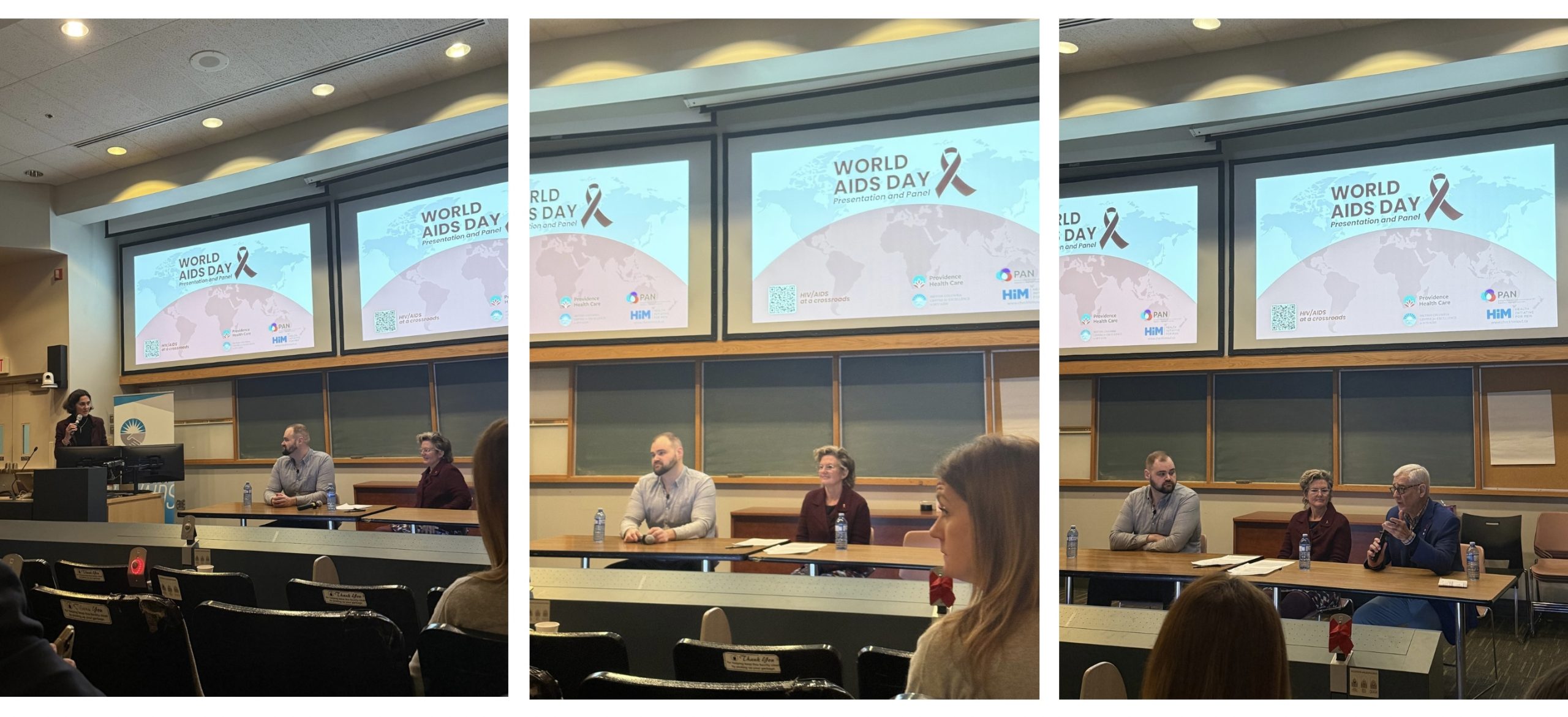
A major theme of the discussion was multiple forms of stigma—self perceived, external stigma, and direct discrimination—and its continued impact on both prevention and treatment. As Aaron reflected, stigma persists because society still struggles with issues related to sex and substance use. Evin highlighted the tension between some positive shifts being witnessed within the healthcare system to honor the voices and perspectives of people living with HIV, people who use drugs and lived experiences – contrasting that with the broader polarization and “othering” happening across society, which undermine efforts to support marginalized communities. A powerful intervention came from a PLHIV audience member who reminded the room that U=U remains unfamiliar to many healthcare workers and other PLHIV, underscoring how much work remains to ensure accurate, empowering information reaches all communities.
“the ultra-intentional connection”
Audience questions invited deeper exploration into the pressures of the moment—disinformation, political complacency, worsening global crises, and the erosion of funding. In response, panelists stressed the need for coordination and solidarity. Aaron spoke to “the ultra-intentional connection” required between institutions like the BC-CfE and grassroots organizations like HIM and PAN to strengthen resilience. Evin urged participants to revisit the BC-CfE’s seven calls to action and emphasized the importance of “singing the same song” to move policy and practice forward with the leadership of PLHIV and Indigenous people and communities. Dr. Montaner reinforced this, naming prejudice and systemic inaction as major barriers to national PrEP coordination and warning that complacency—political and public—threatens to undo decades of progress.
The panel also reflected on engagement with younger generations. While some attendees observed that younger people appear less involved, Aaron noted that HIM continues to see emerging youth leadership, particularly when youth are resourced and invited into the work. Programs such as intergenerational dialogues, collaborations with other community-based organizations, and renewed advocacy for school-based education were highlighted as strategies to keep momentum alive.
Across all perspectives, the panel shared a unified message: community leadership is at the heart of BC’s success, and continued progress depends on strengthening partnerships, investing in community-based services, and ensuring that PLHIV, Indigenous leaders, newcomers, people who use drugs, and young people all have a central voice in shaping the path forward. This is how BC will continue to meet its goals—and how we will protect the progress that so many have fought for.
Working Together to Achieve the 95-95-95 Goals
“Medications alone aren’t enough. Community connection is what gets people in the door, supports them through treatment, and helps them stay engaged in care.”
The panel concluded with a call to collective action. Achieving the 95-95-95 goals—that 95% of people living with HIV know their status, 95% of those diagnosed are on treatment, and 95% of those on treatment are virally suppressed—requires coordinated leadership across sectors.
Community-based organizations, including PAN and HIM, play an essential role in connecting people to testing, PrEP, treatment, harm reduction, and wraparound supports. As our Executive Director shared, “Medications alone aren’t enough. Community connection is what gets people in the door, supports them through treatment, and helps them stay engaged in care.”
The community also strongly supports the advocacy coming from the BC-CfE, including calls for universal access to antiretroviral treatment and PrEP for all Canadians and the end to the criminalization of HIV non-disclosure. BC’s success with Treatment as Prevention® and expanded access to PrEP demonstrates the power of these approaches—but we need federal leadership to ensure all jurisdictions, and all people, benefit.
A Shared Commitment to Not Lose Ground
A core message from the presentation and panel discussion resonated deeply: this is not the time to lose momentum. Any reduction in investment, attention, or infrastructure related to HIV will have real and immediate consequences for people and communities. BC has made tremendous strides, but sustaining progress requires unwavering commitment from government, health authorities, community organizations, clinicians, researchers, and—most importantly—people living with HIV.
As highlighted during the event, BC has long been recognized internationally for its leadership in HIV treatment and prevention. With new HIV diagnoses in Canada rising, people throughout BC face growing inequities that undermine progress—particularly for people who use drugs, people experiencing poverty or homelessness, and those living in rural and remote regions.
HIV-related stigma remains a major barrier. Despite years of education and community leadership, stigma still prevents people from accessing testing, treatment, PrEP, and other supports. Additionally, systemic issues—such as Indigenous-specific racism—continue to harm health outcomes and trust in the health system. Community organizations and advocacy led by Indigenous leadership and community are essential to addressing these injustices, and continued investment in their leadership is critical.
Geography also continues to shape health. The realities of testing, treatment, harm reduction, and ongoing support vary significantly depending on where someone lives. Too many people outside larger centres must navigate fragmented services or travel long distances for care.
World AIDS Day and Indigenous AIDS Awareness Week both remind us that this work is both local and global. BC does not exist in isolation; people move across provinces and countries, and our response must be ready to support everyone who calls BC home, regardless of where in the province they are.
PAN is grateful to all who organized, attended, and contributed to this year’s World AIDS Day 2025 Presentation and Panel event. We are proud to stand with our partners—HIM, the BC-CfE, frontline organizations across the province, and communities most impacted, along with people living with HIV —to advance an HIV response that is equitable, community-driven, and grounded in evidence.
Together, we can ensure that BC continues to lead, continues to learn, and continues to centre the people and communities who have always been at the forefront of the HIV movement.